
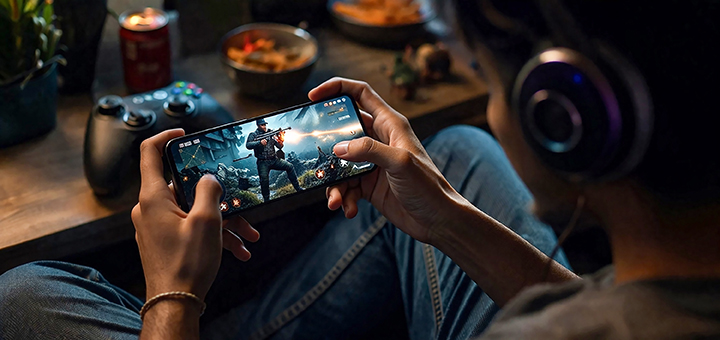
Mobile gaming today looks very different from what it did even a few years ago. Earlier, most mobile games were simple, quick distractions puzzles, endless runners, or basic arcade formats. Now, many mobile titles offer detailed environments, cinematic storytelling, and highly responsive gameplay experiences that rival larger gaming platforms.
A major reason behind this transformation is the growing influence of creative and technically trained professionals entering the industry. Programs like BSc in Animation and Gaming are helping students understand how visual storytelling, interactivity, and performance optimisation come together to shape engaging mobile experiences.
As smartphones become more powerful and gaming audiences become more demanding, developers are expected to design games that are not only entertaining but also visually memorable. This is where structured learning in animation and gaming begins to make a noticeable difference.
What Role Does Animation Play In Mobile Game Design?
Animation plays a crucial role in determining how players perceive and interact with a game. It influences everything from character movement and environmental transitions to feedback signals that guide player decisions.
For instance, when a character reacts naturally to obstacles or when visual effects highlight achievements, players feel more connected to the gameplay. These subtle design elements help make games intuitive and enjoyable even during short play sessions.
Students exploring opportunities at BSc animation colleges are often introduced to animation fundamentals such as motion timing, visual hierarchy, and behavioural realism. These concepts help future developers design experiences that feel smooth and responsive on smaller mobile screens.
Animation also contributes to storytelling. Many modern mobile games include narrative progression, emotional character arcs, and cinematic cutscenes. Well-crafted animations allow developers to communicate these elements effectively without overwhelming players.
What Trends in Mobile Gaming Are Influenced by BSc Animation and Gaming?
Several developments shaping the future of mobile gaming are closely connected to advancements in animation education and creative training. One visible trend is the rise of visually distinctive game styles. Instead of relying only on realism, developers are experimenting with stylised graphics that create strong brand identity.
Another trend involves immersive interaction systems. Augmented reality games, social gaming environments, and open-world mobile experiences require professionals who can blend artistic creativity with technical understanding.
Cross-platform compatibility is also becoming more important. Players increasingly expect games to perform consistently across devices. This has encouraged developers to design animation assets that balance visual quality with performance efficiency.
As technology evolves, the future of mobile gaming is likely to include deeper personalisation, real-time content updates, and dynamic animation systems that adapt to player behaviour.
What Skills From BSc Animation And Gaming are Used in Mobile Game Development?
Graduates from animation and gaming programs bring a wide range of skills into mobile development environments. Visual design capability is one of the most noticeable strengths. Understanding colour balance, character aesthetics, and environmental composition helps create appealing virtual worlds.
Technical skills are equally valuable. Many students gain experience in 2D and 3D modelling, rigging techniques, and animation software tools that support efficient asset creation.
Team collaboration is another important aspect. Mobile games are rarely built by individuals working in isolation. Developers often collaborate with programmers, sound designers, writers, and marketing teams to deliver cohesive experiences.
As competition intensifies within the future of the mobile gaming industry, skills related to performance optimisation and user experience design are becoming increasingly relevant. Developers must ensure that animations remain fluid without consuming excessive device resources.
How Do Advanced Animation Techniques Improve Mobile Game Graphics?
Modern animation techniques are transforming how mobile games look and feel. Features such as particle systems, physics-based motion, and dynamic lighting effects contribute to more immersive environments.
For example, procedural animation allows characters to react differently in varied gameplay situations, reducing repetitive movement patterns. Similarly, environmental animations like shifting weather conditions or destructible objects add depth to gameplay exploration.
These improvements align with broader mobile gaming industry trends, where visual storytelling and realism are helping games stand out in crowded app marketplaces. At the same time, developers continue to experiment with artistic minimalism and stylised motion to capture attention quickly.
Efficient animation pipelines also ensure that high-quality graphics do not negatively affect loading times or battery performance, an important consideration for mobile audiences.
What Career Opportunities Exist for BSc Animation and Gaming Graduates in Mobile Gaming?
The expansion of the mobile gaming ecosystem has created diverse opportunities for graduates trained in animation and interactive design. Roles such as game animator, character artist, UI motion designer, and environment creator are directly connected to visual production workflows.
Some professionals move toward level design, where understanding player psychology and spatial storytelling becomes valuable. Others contribute to quality testing processes, ensuring that animation sequences perform smoothly across devices.
With the continued evolution of global studios and independent development communities, new career paths are emerging alongside changing mobile gaming trends. Remote collaboration and freelance opportunities have also increased, allowing creative professionals to work on international projects.
Entrepreneurial graduates sometimes choose to develop their own game concepts or join startup teams exploring innovative mobile game development trends. As the industry grows, individuals who combine creative thinking with technical adaptability are likely to find meaningful and dynamic career prospects.